Launch offer — valid today only

📄 Digital book in PDF · read it on your phone or print it

Wildfire Mitigation Illustrated: the Exam and the WUI Codes in Drawings Every Zone, Code Value and Walk Step on Its Own Page, for the Mitigation Exam and the Field

Fire behavior, embers, the 0–5, 5–30 and 30–100 ft zones, Class A roofs, vents and eaves, decks, tree spacing on a slope, fire apparatus access and the home assessment. Every topic has its own page: the drawing first, then what you need to remember. 65 illustrated pages.

START STUDYING THIS WAY

🔒 Secure checkout · PDF by email · 30-day guarantee
Every topic, its own pageEach zone, code value and assessment step drawn, with the explanation right beside it
65 illustrated pages8 parts, from fire behavior to the exam review
Up-to-date sourcesNFPA 1140 (2022) and the ICC IWUIC, with California Chapter 7A and CAL FIRE as examples. Every value tagged with its source
PDF by emailFormat

Look Inside the Book

Every page has one big drawing and a box with the distances, code values and steps you need to know:

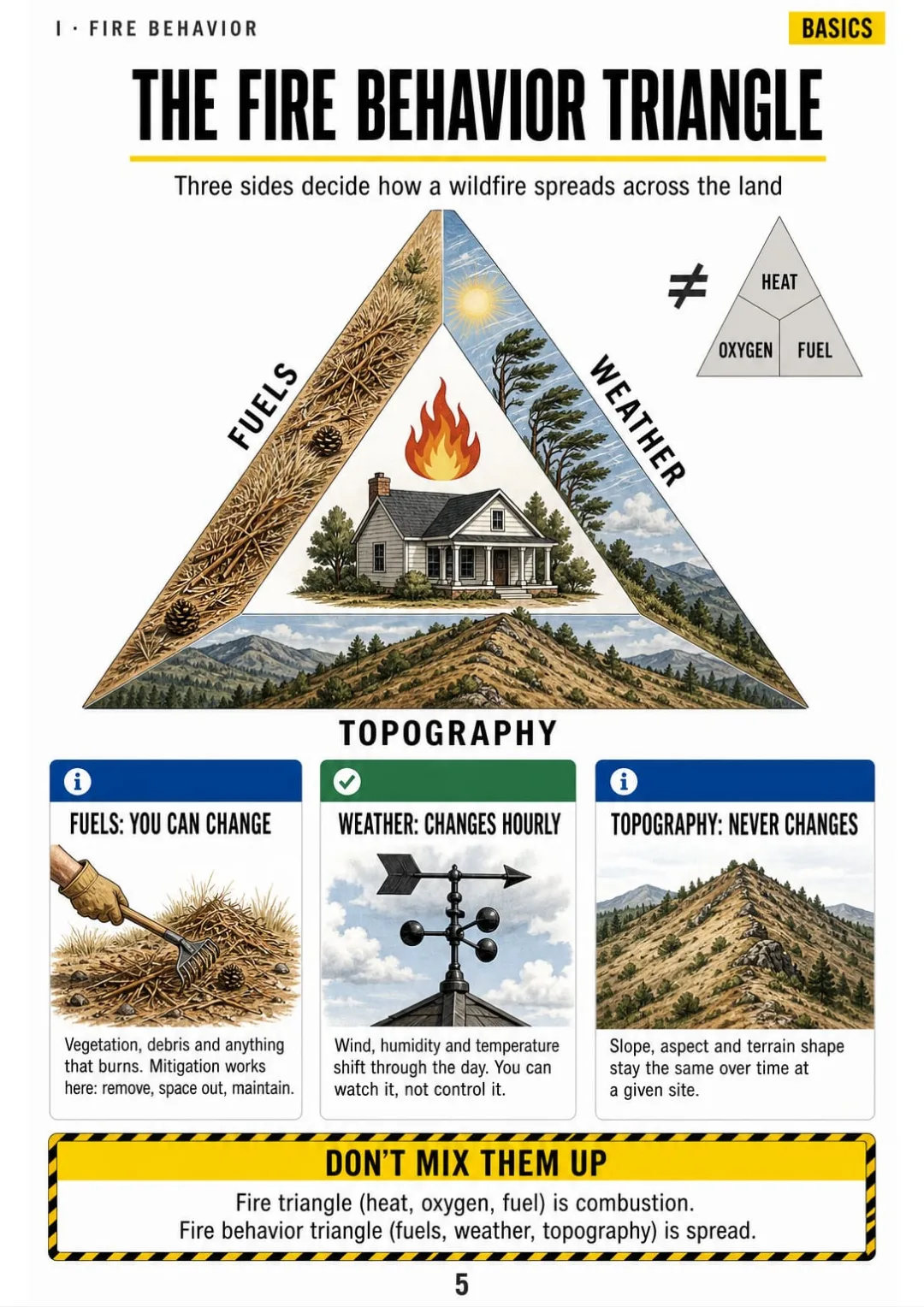
Fuels, weather, topography: topography never changes, fuels are where mitigation works.
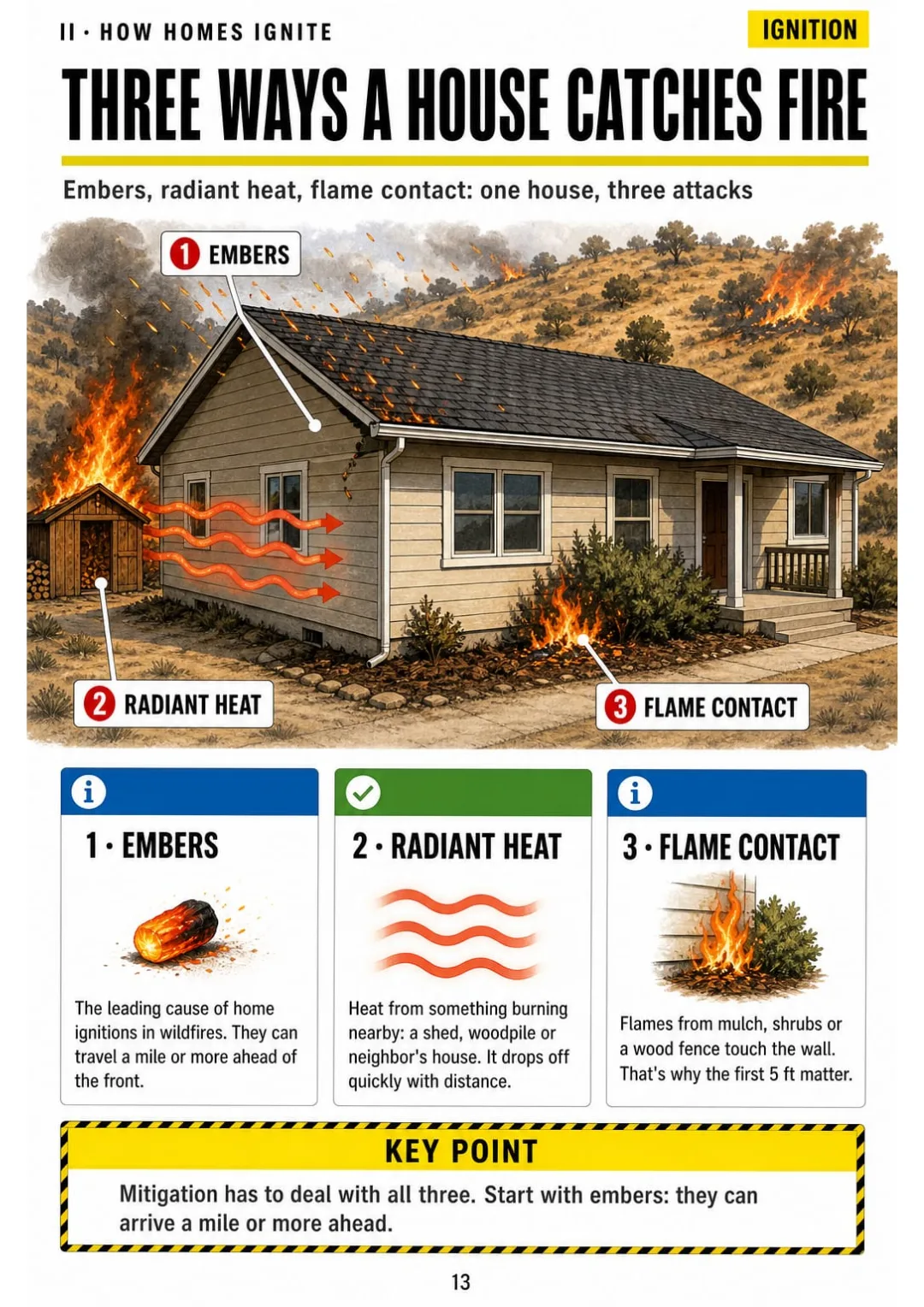
Embers, radiant heat and direct flame: the three ways a home ignites, drawn on one house.
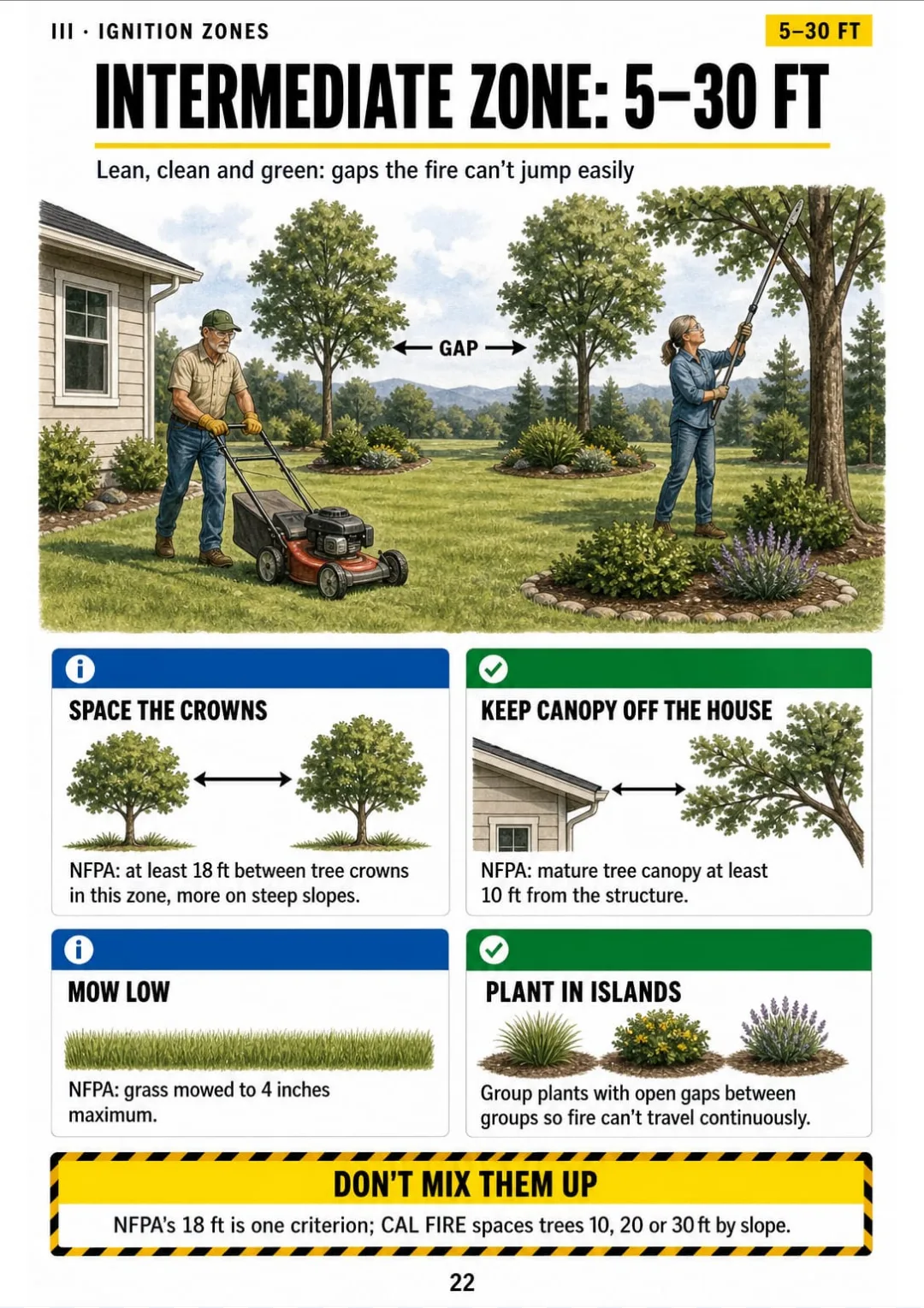
5–30 ft: crowns 18 ft apart, canopy 10 ft off the house, grass 4 in max (NFPA).
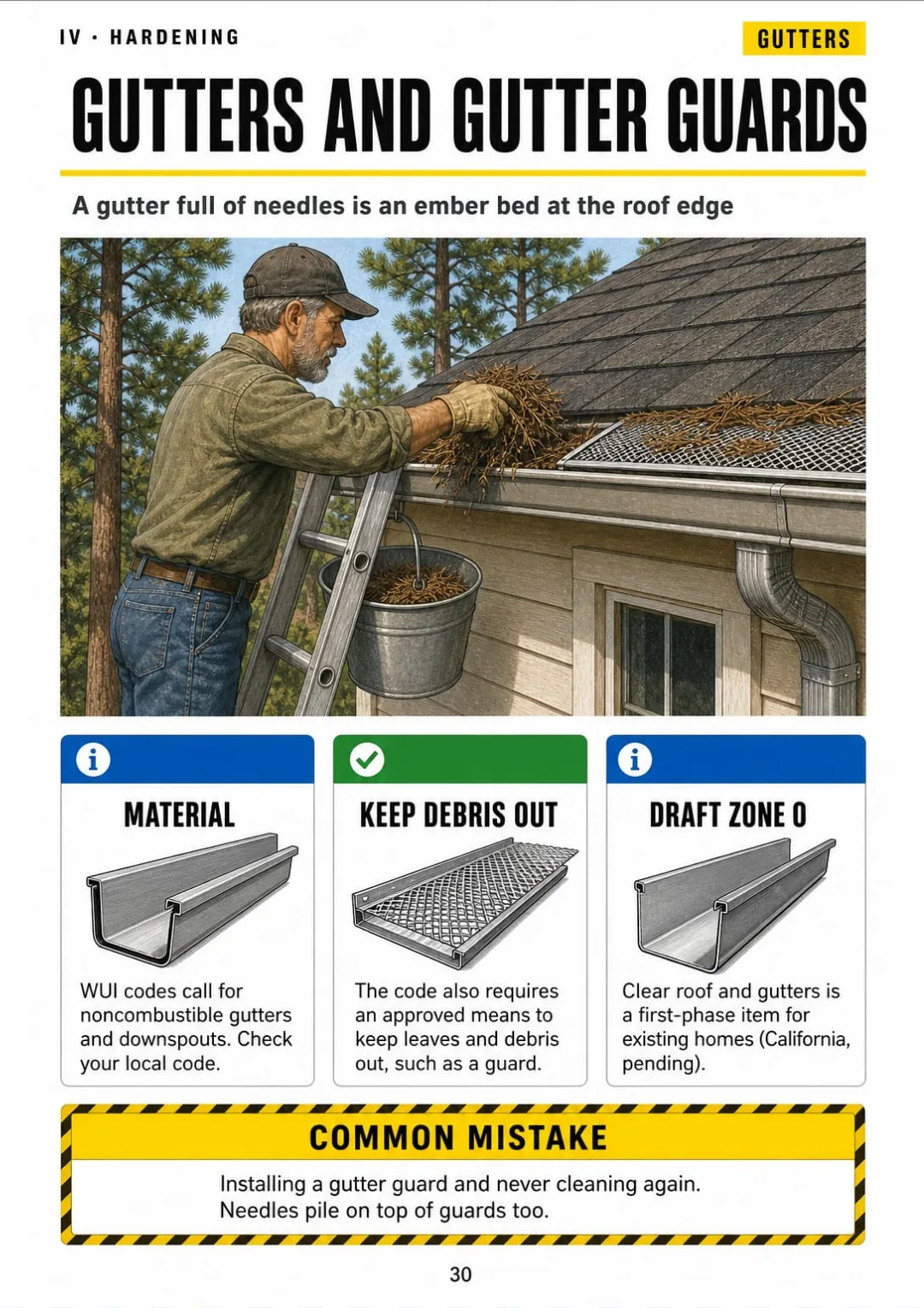
Noncombustible gutters + an approved guard, and still clean them (CWUIC §504.4)
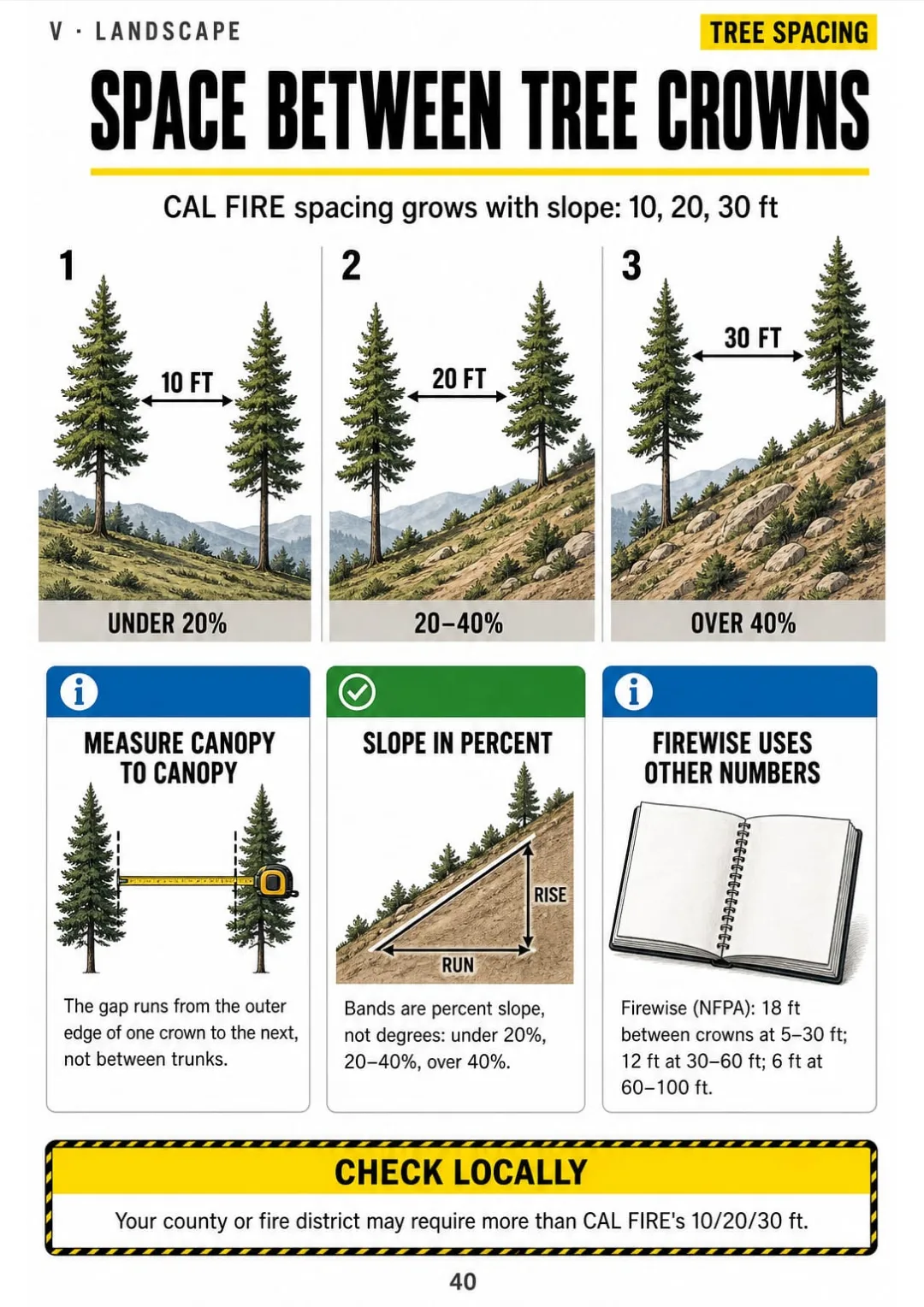
CAL FIRE crown spacing: 10 ft under 20% slope, 20 ft at 20–40%, 30 ft over 40%.
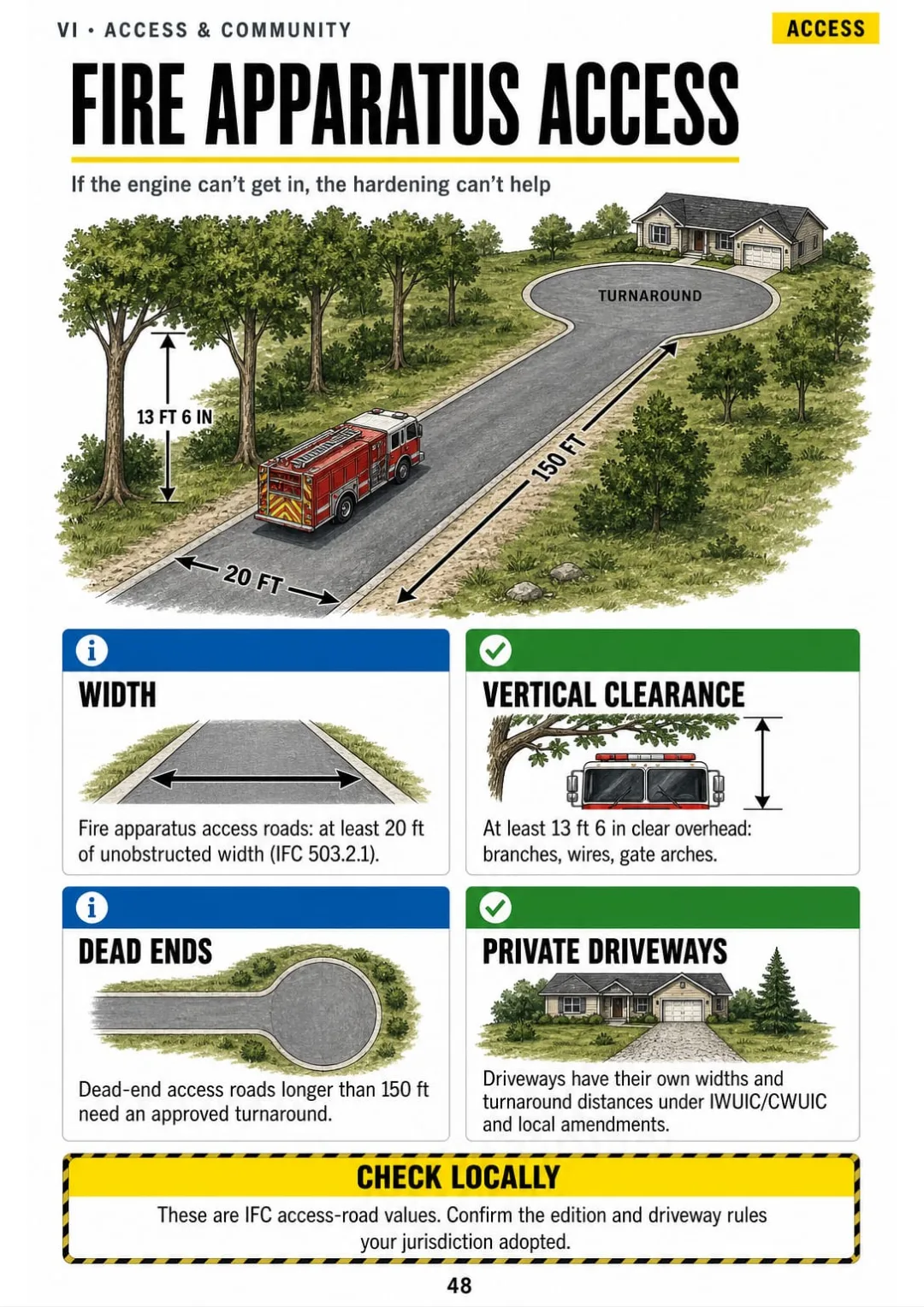
IFC access roads: 20 ft wide, 13 ft 6 in clear, turnaround on dead ends over 150 ft
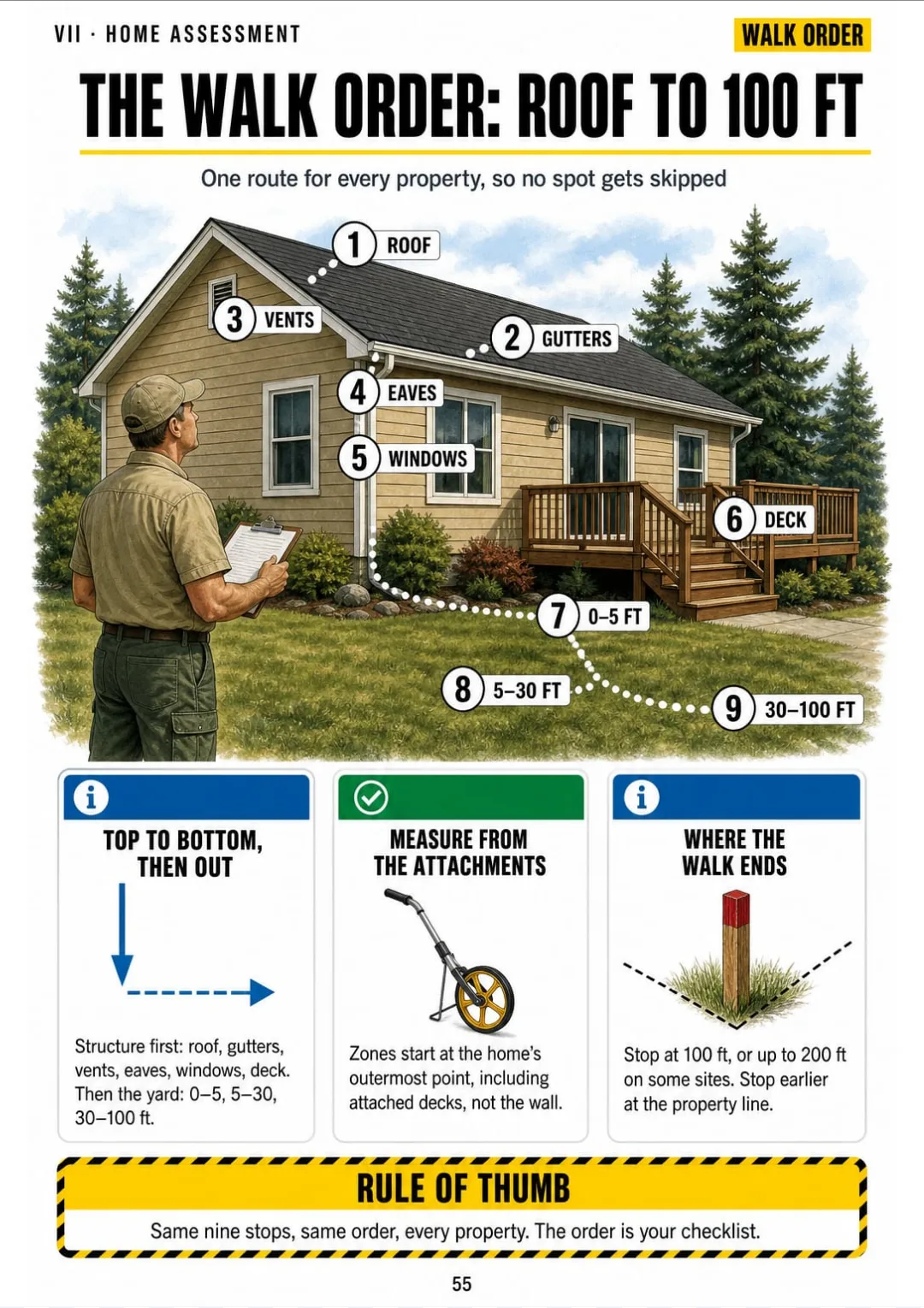
Roof → gutters → vents → eaves → windows → deck → 0–5 → 5–30 → 30–100 ft
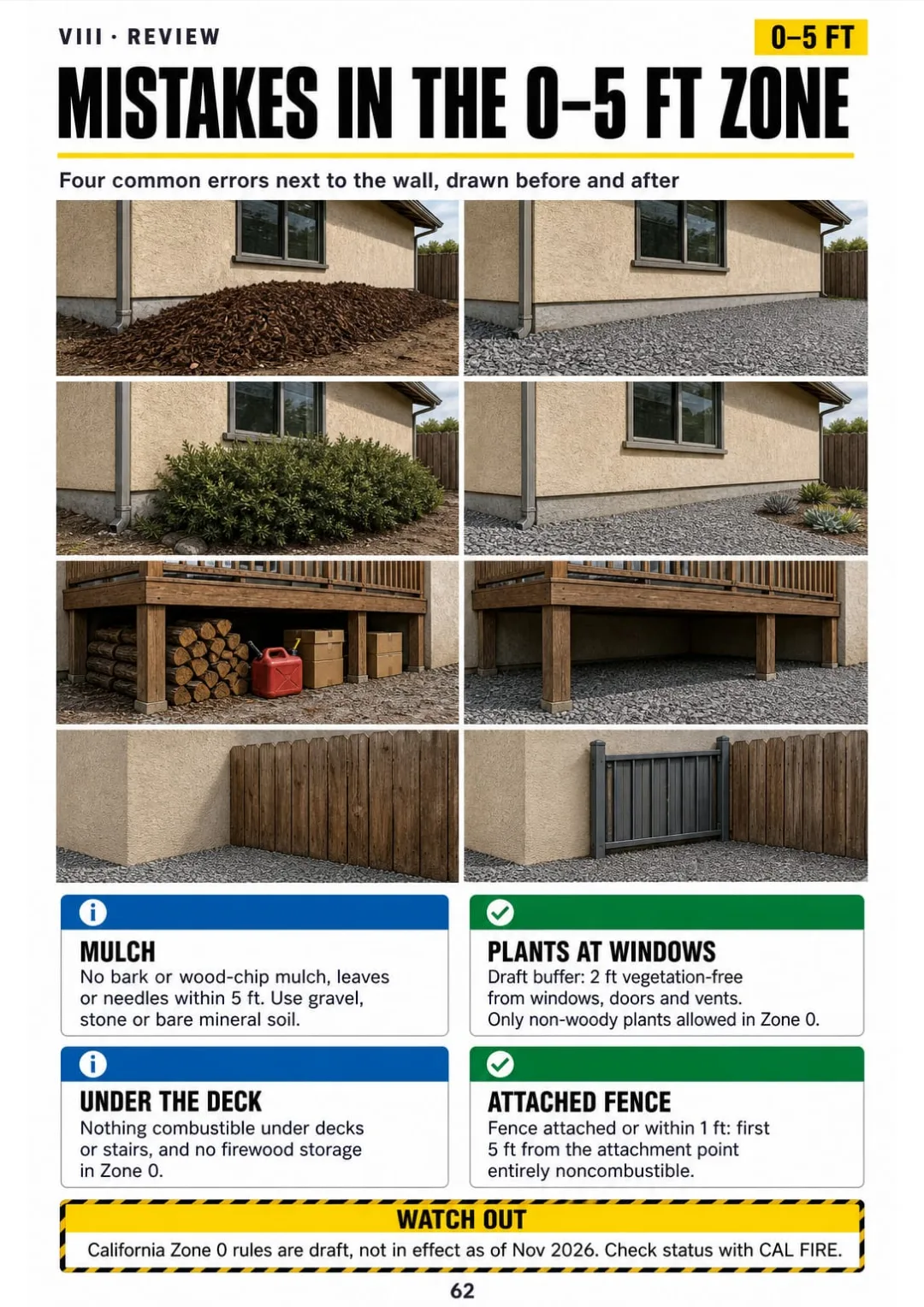
Four 0–5 ft mistakes, each drawn before and after

Swipe to see more →

These are real pages from the book. The table of contents is the full one: 8 parts and 61 topics.

The Problem Isn't You. It's How It Was Explained to You.

You're standing in a driveway with a homeowner, and they ask what has to go in the first five feet and what can stay at thirty.

You studied it. But the guide lays it out in paragraphs: immediate, intermediate, extended, each with its own list and its own exceptions. Three zones written as prose blur into one.

5–30 ft: crowns 18 ft apart, canopy 10 ft off the house, grass 4 in max (NFPA).

In the book, those zones are a single page: the house seen from above, with three rings at 0–5, 5–30 and 30–100 ft, each in its own color, each with one goal written beside it.

Embers, Class A roofs, vents, crown spacing on a slope, fire apparatus access: each one has its own page, drawn the same way.

So you point at the ring, say what goes there and why, and you don't need to go back to the manual.

COMPARE FOR YOURSELF

Same Topic, Two Ways to Study It

THIS
  • The manual: line after line
  • Ignition paths explained only in words
  • You show up to the exam with doubts
Structure ignition in the wildland-urban interface occurs through three principal mechanisms. Firebrands, or embers, lofted by the convective column may be transported considerable distances and deposited on or within the structure, igniting fine fuels accumulated in gutters, on roof surfaces, at vent openings or beneath decks. Radiant heat transfer from adjacent burning vegetation or structures may raise exposed surfaces to ignition temperature as a function of flame size, exposure duration and separation distance. Direct flame contact results where continuous fuels allow flames to reach the structure itself.
FOR THIS
  • The three ignition paths in one drawing
  • The distances in a box
  • You see it and you get it
Embers, radiant heat and direct flame: the three ways a home ignites, drawn on one house.
CONTENTS

Take a Look at the 8 Parts and 61 Topics

How wildfire behaves, how homes ignite, the ignition zones, hardening the structure, landscape and vegetation, access, water and community, the home assessment and the final review: 65 pages, all illustrated.

IHow Wildfire Behaves · pp. 5-12
  1. The Fire Behavior Triangle: Fuels, Weather, Topography
  2. Fuel Moisture and Timelag Classes
  3. Fuel Types: Grass, Shrub, Timber, Slash
  4. Fuel Arrangement: Ladder Fuels and Continuity
  5. Weather: Wind, Relative Humidity, Temperature
  6. Topography: Slope, Aspect, Chimneys and Saddles
  7. Surface, Crown and Spotting Fire
  8. Plume-Driven vs. Wind-Driven Fire
IIHow Homes Ignite · pp. 13-19
  1. Three Ways a House Catches Fire
  2. Embers: The Main Threat
  3. Where Embers Land and Pile Up
  4. Radiant Heat and Distance
  5. Direct Flame Contact
  6. The Home Ignition Zone Concept
  7. House-to-House Spread in Dense Neighborhoods
IIIThe Ignition Zones · pp. 20-27
  1. The Zones at a Glance: 0–5, 5–30, 30–100 ft
  2. Immediate Zone (0–5 ft): Noncombustible
  3. Intermediate Zone (5–30 ft): Break Up the Fuel
  4. Extended Zone (30–100 ft): Slow the Fire Down
  5. Measuring Zones on a Slope
  6. Zone 0 vs. PRC 4291 vs. Local Ordinances
  7. Fire Hazard Severity Zones and WUI Mapping
  8. Accessory Structures Inside the Zones
IVHardening the Structure · pp. 28-39
  1. Roof: Class A Assembly
  2. Roof Edges, Valleys and Debris
  3. Gutters and Gutter Guards
  4. Vents: Mesh Size and Ember-Resistant Vents
  5. Eaves and Soffits
  6. Exterior Walls and Siding
  7. The 6-Inch Noncombustible Base
  8. Windows and Glass
  9. Exterior Doors and Garage Doors
  10. Decks: Surface, Underside and Attachment
  11. Fences Attached to the House
  12. Chimneys, Spark Arresters and Utilities
VLandscape and Vegetation · pp. 40-47
  1. Horizontal Spacing Between Trees
  2. Spacing Between Shrubs
  3. Vertical Clearance: Limbing Up Trees
  4. Plant Choice: It's Maintenance, Not 'Fireproof' Plants
  5. Mulch: What Goes Where
  6. Firewood, Lumber and Stored Materials
  7. Dead Material and Ongoing Maintenance
  8. Fuel Breaks, Shaded Fuel Breaks and Prescribed Fire
VIAccess, Water and Community · pp. 48-54
  1. Driveways and Fire Apparatus Access
  2. Address Signs and Gates
  3. Water Supply for Firefighting
  4. Community Wildfire Protection Plans (CWPP)
  5. Firewise USA and Fire Adapted Communities
  6. Evacuation and Ready, Set, Go!
  7. Insurance Programs and Mitigation Credits
VIIThe Home Assessment, Same Order Every Time · pp. 55-60
  1. The Walk Order: Roof to 100 ft
  2. Before You Arrive: Maps, Slope and History
  3. Reading the Structure from the Outside
  4. Reading the Landscape Around the House
  5. Setting Priorities: What to Fix First
  6. Explaining It to the Homeowner
VIIIReview and Frequent Mistakes · pp. 61-65
  1. Key Numbers on One Page
  2. Frequent Mistakes in the 0–5 ft Zone
  3. Frequent Mistakes on the Structure
  4. Terms That Get Mixed Up
  5. Exam Review by Domain

One Page, One Topic, All Clear

Think of it this way:

You're on a property with a clipboard, and the deck sits right over a bed of pine needles. You need to know what to check first, and what the code asks for.

You open the book to the walk order and see the house drawn in layers: roof, gutters, vents, eaves, windows, deck, then 0–5, 5–30 and 30–100 ft, numbered in the order you walk them.

CAL FIRE crown spacing: 10 ft under 20% slope, 20 ft at 20–40%, 30 ft over 40%.

Same with embers, Class A roofs, crown spacing on a slope, mulch and fire apparatus access: each one on its own page.

Wildfire Mitigation Illustrated is 8 parts and 61 topics, all drawn, ending with the key numbers on one page, the most frequent mistakes and an exam review by domain.

What you see drawn, you don't have to memorize.

What's Inside Wildfire Mitigation Illustrated:

Ipp. 5-12

How Wildfire Behaves

The fire behavior triangle, fuel moisture and timelag, fuel types, ladder fuels, wind and humidity, slope and chimneys, crown fire and spotting.

IIpp. 13-19

How Homes Ignite

The three ways a house ignites, embers as the main threat, where they pile up, radiant heat, direct flame and house-to-house spread.

IIIpp. 20-27

The Ignition Zones

The 0–5, 5–30 and 30–100 ft zones at a glance, what goes in each, measuring on a slope, Zone 0 vs. PRC 4291, hazard maps and sheds.

IVpp. 28-39

Hardening the Structure

Class A roofs, edges and valleys, gutters, vent mesh, eaves, siding, the 6-inch base, windows, doors, decks, attached fences and chimneys.

Vpp. 40-47

Landscape and Vegetation

Spacing between trees and shrubs, limbing up, plant choice and maintenance, mulch, firewood, dead material and fuel breaks.

VIpp. 48-54

Access, Water and Community

Driveways and apparatus access, address signs and gates, water supply, community wildfire plans, evacuation and insurance credits.

VIIpp. 55-60

The Home Assessment, Same Order Every Time

The walk order from roof to 100 ft, pre-visit maps and slope, reading the structure and the landscape, setting priorities and explaining it to the homeowner.

VIIIpp. 61-65

Review and Frequent Mistakes

Key numbers on one page, frequent mistakes in the 0–5 ft zone and on the structure, terms that get mixed up and an exam review by domain.

At the end of the book: Key numbers on one page, frequent mistakes and an exam review by domain.

Plus: 2 Free Books

Wildfire Mitigation Exam-Style Practice Questions

BONUS 1: «Wildfire Mitigation Exam-Style Practice Questions»

Value on its own: US$ 17.90

Test yourself on fire behavior, ignition zones, home hardening and community planning, with every answer explained so you know why, not just what.

The 15 Most Common Mitigation Mistakes, Before & After

BONUS 2: «The 15 Most Common Mitigation Mistakes, Before & After»

Value on its own: US$ 14.90

See the mistakes found most often on real properties, from mulch against the wall to unscreened vents, drawn side by side with the fix.

Wildfire Mitigation Illustrated with 2 Free Books

  • Wildfire Mitigation Illustrated: 65 illustrated pagesUS$ 63
  • BONUS 1: Wildfire Mitigation Exam-Style Practice QuestionsUS$ 17.90
  • BONUS 2: The 15 Most Common Mitigation Mistakes, Before & AfterUS$ 14.90
  • High-resolution PDF to printIncluded
Total value US$ 95.80
YOUR PRICE:
US$ 27
You save US$ 68.80
YES, I WANT WILDFIRE MITIGATION ILLUSTRATED FOR US$ 27

📄 This is a digital PDF book sent to your email: nothing is printed or shipped.

Secure purchaseEncrypted payment30-day guarantee

PDF by email: We email you Wildfire Mitigation Illustrated as a PDF, together with the two free books. It's a single payment: no installments, no extra charges.

Who This Book Is For

You're studying for the certification

You're studying for the certification

Fire behavior, ignition and zones in the same order the topics connect, so each page builds on the last one.

Exam day is close

Exam day is close

The key numbers on one page and the review by domain, to go over everything in one sitting and spot what still needs work.

You already do home assessments

You already do home assessments

The walk order from roof to 100 ft, printed and in the truck, plus a drawing for every “why” a homeowner asks.

Everything You Get Today

US$ 95.80US$ 27
YES, I WANT WILDFIRE MITIGATION ILLUSTRATED FOR US$ 27

📄 This is a digital PDF book sent to your email: nothing is printed or shipped.

30DAYS
GUARANTEE

30-Day Guarantee

Try Wildfire Mitigation Illustrated for 30 days, bonus books included.

We refund everything if the file won't open, if the book isn't what you see here, if you were charged twice or if the email doesn't arrive. Just email us.

You pay once. No subscriptions.

Frequently Asked Questions

Is it for me if I already work in fire or vegetation management?

Yes. It isn't a beginner's “prevent wildfires” book. It follows NFPA 1140, one of the main references for the NFPA Certified Wildfire Mitigation Specialist (CWMS), and it also fits state and local defensible space inspector programs. It covers fire behavior, ignition, zones, home hardening and the home assessment, for exam prep and field work. It assumes you already know fire or vegetation work.

Where does the content come from?

From NFPA 1140 (2022 edition) and the ICC International Wildland-Urban Interface Code, which are the national baseline, plus California Building Code Chapter 7A, PRC 4291 and CAL FIRE guidance. Every value is tagged with its source, so you can tell a national value from a California rule and check it against the edition your jurisdiction has adopted.

Is it official material?

No. It's independent study material, not affiliated with NFPA, ICC, CAL FIRE or any certifying body. It doesn't grant a certificate or continuing education credits: it's for studying and reviewing for the one you're preparing.

Does it replace the course or training?

No. It's a visual companion to study and review alongside your official training and field experience. Mitigation reduces risk; it doesn't eliminate it.

Are the practice questions the ones on the exam?

No. They're written for this book, in exam style, with every answer explained. They are not official questions from any exam.

When and how does it arrive?

The book and the 2 free books come as a PDF by email, to the address you enter at checkout.

Do I have to pay every month?

No. It's a one-time payment.

Can I have it on paper?

Yes. The PDF prints well at home or at a print shop, so you can keep a copy in the truck.

How does the refund work?

You have 30 days. We refund everything if the file won't open, if the book isn't what you see on this page, if you were charged twice or if the email doesn't arrive: just email us.

Before You Close This Page

No more rereading codes that don't stick.

The 0–5, 5–30 and 30–100 ft zones: you see them drawn and you've got them.

You get to the exam and the assessment knowing where everything is.

Drawings make studying faster.

The book is right below.

One-time payment: US$ 27 · Guarantee: 30 days · PDF by email

YES, I WANT WILDFIRE MITIGATION ILLUSTRATED FOR US$ 27

📄 This is a digital PDF book sent to your email: nothing is printed or shipped.